About chromatography columns
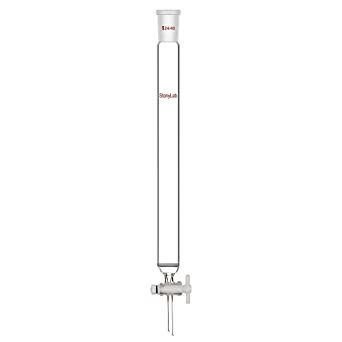
A Chromatography column is a device used in chromatography for the separation of chemical compounds. A chromatography column contains the stationary phase, allowing the mobile phase to pass through it. Chromatography columns of different types are used in both gas and liquid chromatography.Exceptional Chemical and Thermal ResistanceEngineered from premium borosilicate glass and stainless steel, these columns withstand harsh acids, bases, and temperatures up to 200C. Their chemical resilience makes them ideal for demanding laboratory environments, whether cleaning with strong reagents or operating at elevated temperatures. The integrated PTFE components further enhance compatibility and longevity.
Flexible Design for Multiple Chromatographic TechniquesThese columns support a range of chromatography types, including HPLC, flash, gravity, and preparative methods. Modular fittings and customizable dimensions (from 500 ml to 10 L) allow users to select the right configuration for their specific analytical or purification workflow. The vertical or horizontal mounting options add to their versatility.
User-Friendly Features for Efficient Lab OperationsLeak-proof PTFE screw fittings, integrated septa, and transparent cylindrical bodies provide convenience, visibility, and secure operation. The columns are easy to assemble, transport, and maintain-offering both manual and automatic control options. This results in streamlined chromatographic processes with high accuracy and reliability.
FAQ's of chromatography columns:
Q: How do I clean and sterilize the chromatography columns?
A: Chromatography columns can be autoclaved and are resistant to strong acids and bases, allowing for thorough chemical cleaning. Always disassemble and clean the PTFE end caps separately, and ensure the column is fully dry before reuse.
Q: What types of chromatographic techniques can these columns be used for?
A: These columns are compatible with HPLC, flash, gravity, and preparative chromatography. Their modular design and chemical resistance make them suitable for a wide spectrum of laboratory separation and purification tasks.
Q: When should I use vertical versus horizontal mounting of the column?
A: Vertical mounting is typically used for gravity-fed processes and facilitates efficient packing and flow. Horizontal mounting can be chosen when space is limited or specific process requirements dictate, as both configurations maintain column integrity.
Q: Where can the columns be employed within laboratory workflows?
A: These chromatography columns are ideal for laboratories focused on analytical research, separation, and purification. Their portable design allows for easy relocation within lab environments, supporting various experimental setups.
Q: What media are suitable for column packing?
A: The columns accept silica gel, resin, alumina, and other common chromatographic media. Select the packing material based on your separation requirements and the nature of your analytes.
Q: How does the integrated septa benefit sample collection?
A: The PTFE end caps with integrated septa facilitate secure, contamination-free sampling and injection, allowing process monitoring and fraction collection without disturbing the packed bed or risking leaks.
Q: What advantages does the transparent column design offer?
A: A transparent cylindrical body enables continuous visual observation of packing, process development, and separation. This helps users optimize conditions and quickly identify any channeling or packing issues.







 Get Latest Price


 Send Inquiry
 Send Inquiry
 Send SMS


