About Graham condenser
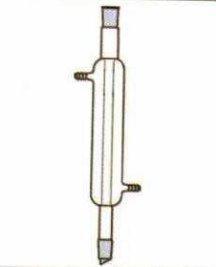
A Graham condenser is used to cool and condense a gas back to a liquid, often as part of the process of chemical distillation. The piece consists of a coiled glass tube through which the gas travels. The coil is surrounded by a jacket of water that helps to cool the gas.Advanced Condensation EfficiencyThe coiled inner tube within the Graham condenser maximizes contact between vapor and cooling surface, resulting in superior condensation efficiency for laboratory distillation and reflux procedures. Its design ensures optimal performance even when working with volatile or chemically aggressive substances.
Durability and CompatibilityMade from premium borosilicate glass, the Graham condenser exhibits high chemical resistance and can withstand temperatures up to 500C. This ensures compatibility with a wide range of acids, bases, and organic solvents, while also providing resilience during repeated laboratory use.
Versatility Across Laboratory SetupsAvailable with customizable capacities, socket/cone sizes (such as B19 and B24), and adaptable tubing connections, the Graham condenser suits diverse laboratory requirements. It supports vertical use and can be employed for both distillation and reflux processes in research, industrial, and educational settings.
FAQ's of Graham condenser:
Q: How is the Graham condenser installed and used in the laboratory?
A: To install the Graham condenser, connect its standard ground joint to compatible glassware and attach tubing to the side arms for coolant flow. The device is typically used in vertical orientation, allowing coolant to circulate through the jacket while vapors condense in the inner coil.
Q: What benefits does the coiled spiral inner tube offer compared to other condenser designs?
A: The coiled spiral inner tube provides an increased surface area for vapor contact, improving heat exchange and condensation efficiency. This design offers enhanced performance, especially in applications requiring rapid cooling or when handling volatile chemicals.
Q: When should a Graham condenser be chosen over other types of condensers?
A: A Graham condenser is preferred in distillation or reflux setups where maximizing condensation efficiency is critical, particularly for volatile solvents or in cases where high chemical resistance is required due to the nature of the reagents being used.
Q: What materials make the Graham condenser resistant to chemicals and high temperatures?
A: Constructed entirely from borosilicate glass, the Graham condenser withstands chemical attack from acids, bases, and organic solvents, and resists thermal shock at temperatures up to 500C, ensuring longevity and safety in demanding laboratory environments.
Q: Where can the Graham condenser be sourced and are different specifications available?
A: The Graham condenser is available through distributors, exporters, manufacturers, suppliers, service providers, and traders, mainly in India. It comes in various joint sizes, capacities, and lengths to accommodate different laboratory apparatus and requirements.
Q: What is the recommended process for cleaning and maintaining a Graham condenser?
A: After use, flush the condenser with appropriate solvents or detergents compatible with borosilicate glass. Rinse thoroughly and allow to air dry or use gentle heating. Its reusable design ensures easy cleaning and long-term maintenance.







 Get Latest Price


 Send Inquiry
 Send Inquiry
 Send SMS


