About Reagent Lab Bottle
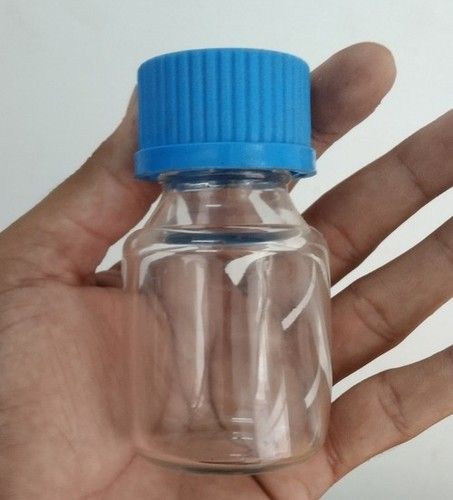
Reagent bottles, also known as media bottles or graduated bottles, are containers made of glass, plastic, borosilicate or related substances, and topped by special caps or stoppers. They are intended to contain chemicals in liquid or powder form for laboratories and stored in cabinets or on shelves.Precision and Versatility in Chemical HandlingDesigned to accommodate a variety of laboratory needs, the reagent lab bottle supports safe chemical storage, mixing, and transportation tasks. Its durable borosilicate glass construction ensures excellent thermal and chemical resistance. Graduation markings provide accuracy, while leak-proof caps guarantee safety and containment in both clear and amber glass forms.
Adaptability Across Laboratory EnvironmentsChoose between wide or narrow mouth options for effortless filling or dispensing. These bottles are suitable for academic, research, pharmaceutical, and industrial laboratories, adapting seamlessly to any setting where reliable chemical containment is paramount. The autoclave compatibility allows easy sterilization, ensuring long-term, contamination-free use.
FAQ's of Reagent Lab Bottle:
Q: How should I clean and sterilize the reagent lab bottle?
A: The borosilicate glass bottle is designed to be autoclaved for convenient sterilization. Wash using a mild laboratory detergent, rinse thoroughly, and autoclave according to standard protocols (up to 250C) to maintain hygiene and structural integrity.
Q: What types of chemicals can be safely stored in this bottle?
A: Thanks to its high chemical resistance, the reagent lab bottle can store a wide range of laboratory chemicals and reagents, including acids, bases, solvents, and organics, without risk of degradation or leakage.
Q: When should I choose a wide mouth over a narrow mouth bottle?
A: Select a wide mouth bottle when you need easy access for mixing, pouring, or transferring solids and viscous liquids. Narrow mouth bottles are preferable for limiting evaporation and controlling liquid dispensing.
Q: Where can these bottles be used in laboratory settings?
A: These lab bottles are fit for use in diverse environments, including research laboratories, educational institutions, pharmaceuticals, and chemical industries throughout India and globally.
Q: What benefits do the graduation markings provide?
A: Graduation markings printed on the bottle enable precise measurement of liquids, enhancing accuracy in laboratory workflows while reducing the need for additional equipment.
Q: What is the process for ensuring the bottle remains leak-proof during use?
A: Ensure the polypropylene screw cap is tightened securely after filling. Regularly inspect both the cap and bottle threads for wear or residue, which could compromise the leak-proof seal.
Q: Can these bottles be reused, and how do I ensure their longevity?
A: Yes, these bottles are designed for repeated use. To maintain their durability, clean promptly after each use, avoid abrasives, and regularly autoclave following the recommended procedure.






 Get Latest Price


 Send Inquiry
 Send Inquiry
 Send SMS


