About soxhlet extraction apparatus
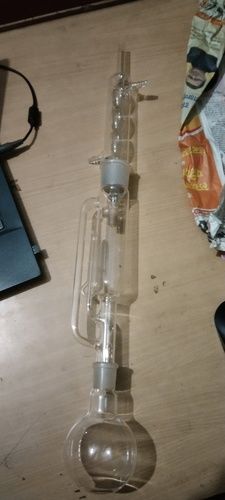
Soxhlet extraction is used when the desired compound has a limited solubility in a solvent, and the impurity is insoluble in that solvent. It allows for unmonitored and unmanaged operation while efficiently recycling a small amount of solvent to dissolve a larger amount of material.Advanced Glassware for Reliable ExtractionCrafted from high-grade borosilicate glass, the Soxhlet extractor features exceptional thermal resistance and chemical inertness, ensuring accurate, repeatable results. Leak-proof joints and replaceable parts make cleaning and assembling straightforward, while compliance with international laboratory standards highlights its suitability for a broad range of scientific applications.
Versatile Extraction SystemDesigned with modularity in mind, the Soxhlet extraction apparatus supports batch extraction processes for fats, oils, plant extracts, and environmental or food samples. With options for manual or automatic operation, and capacity ranging from 100 mL to 2000 mL, labs can customize the system for single or multiple extractions based on workflow requirements.
Precision Control and User-Friendly OperationOperation modes include batch extraction with manual control or digital thermostat settings for the heating mantle. Compatible with various thimble materials, such as cellulose and glass microfiber, the apparatus meets accuracy demands for analytical tasks. Clear analog or digital displays facilitate monitoring, and the robust construction offers durability for routine laboratory use.
FAQ's of soxhlet extraction apparatus:
Q: How does the Soxhlet extraction apparatus enhance the efficiency of solvent extraction in the lab?
A: The Soxhlet extraction apparatus enables continuous solvent extraction, allowing the solvent to repeatedly wash the sample over extended periods (up to 24 hours). This process maximizes the yield of bioactive components, fats, oils, or plant extracts, ensuring high extraction efficiency and analytical accuracy for diverse sample types.
Q: What types of samples and solvents is the Soxhlet extractor compatible with?
A: This apparatus is suitable for extracting constituents like fats, oils, environmental samples, and plant extracts from solid materials, using most laboratory organic solvents. Borosilicate glass construction with high chemical resistance ensures safe compatibility with a wide array of solvents commonly found in research and testing laboratories.
Q: When is it recommended to use a Soxhlet extractor with an Allihn or Dimroth condenser?
A: Both Allihn and Dimroth water-cooled condensers are ideal when efficient and continuous cooling is required during lengthy extraction processes. Their design ensures optimal solvent condensation, minimizing loss and maintaining system performance for extraction operations of up to 24 hours.
Q: Where can the Soxhlet extraction apparatus be installed in the laboratory setup?
A: The device can be mounted on a standard laboratory retort stand or placed on a heating mantle equipped with a support rod. This flexible mounting allows easy integration into existing lab workflows and ensures stable operation during batch extraction processes.
Q: What is the process for assembling and cleaning the Soxhlet extractor?
A: Assembly involves connecting the extractor body, condenser, round bottom flask, and securing all parts with joint clips and connecting clamps. The modular, leak-proof design with replaceable glass parts facilitates straightforward cleaning, ensuring contamination-free operation after each use.
Q: How does using high-grade borosilicate glass benefit laboratory extractions?
A: High-grade borosilicate glass offers superior thermal shock resistance and chemical durability, supporting safe, repeated heating cycles up to 300C. This minimizes risk of breakage or leaching, providing reliable results and prolonging the apparatus's lifespan for extraction tasks.
Q: What are the usage guidelines for controlling extraction time and sample size?
A: Extraction time can be customized, typically ranging up to 24 hours depending on sample type and flask size. Sample sizes from 1 g to 50 g are supported by changing the flask and thimble, allowing precise adaptation for analytical or preparative extractions as per laboratory needs.






 Get Latest Price


 Send Inquiry
 Send Inquiry
 Send SMS
 Call Me Free


