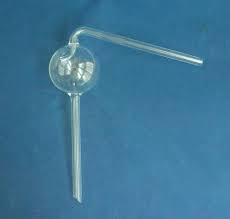
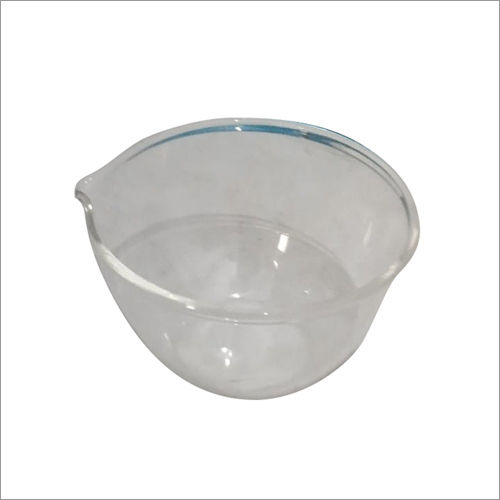
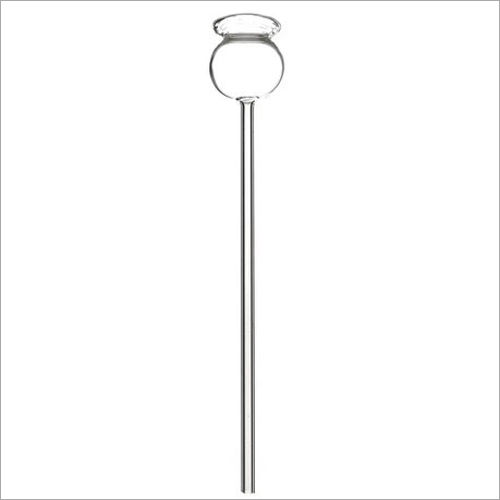
About Borosilicate Glass Kjeldhal Bulb
It's made of borosilicate glass to withstand thermal shock. The Kjeldahl distillation bulb is included in our Distillation Apparatus Kit and Deluxe Distillation Apparatus Kit. This Kjeldahl bulb improves distillation efficiency by preventing carryover of liquid into the condenser.High-Quality Borosilicate ConstructionManufactured from premium borosilicate glass, our Kjeldahl Bulb guarantees exceptional thermal and chemical resistance. Its robust design ensures uniformity and durability, making it suitable for repeated use in demanding laboratory conditions, including high-temperature heating up to 500C.
Designed for Precision in Analytical LabsThis Kjeldahl Bulb is engineered for accurate digestion and distillation, supporting Kjeldahl nitrogen determination and a variety of chemical analyses. The standard ground glass joint and smooth finish enable safe, reliable assembly with laboratory systems.
Safe and Convenient for Professional UseEach bulb is autoclavable, ensuring complete sterilization between uses. The transparent structure offers easy content monitoring during processes, while the packaging adapts to individual or bulk requirements, ensuring protection during transport and storage.
FAQ's of Borosilicate Glass Kjeldhal Bulb:
Q: How is the Borosilicate Glass Kjeldahl Bulb typically used in laboratory analysis?
A: The bulb is primarily used for digestion and distillation in chemical analysis, especially for Kjeldahl nitrogen determination. It handles various chemicals safely and can withstand the rigorous heating required in these analytical methods.
Q: What makes this Kjeldahl Bulb suitable for use with acids, alkalis, and organic solvents?
A: Made from high-grade borosilicate glass with a smooth, uniform wall, the bulb resists chemical corrosion, allowing safe use with acids, alkalis, and organic solvents commonly used in laboratory protocols.
Q: When should a laboratory choose an autoclavable glass bulb over non-autoclavable versions?
A: An autoclavable bulb should be selected when sterilization between uses is necessary, as this ensures contaminants are eliminated and the glassware remains hygienic and safe for repeated analytical procedures.
Q: Where are these Kjeldahl Bulbs commonly found and used?
A: They are mainly found in analytical chemistry laboratories, research institutions, educational facilities, and industries requiring accurate nitrogen analysis.
Q: What is the process for cleaning and sterilizing the bulb after use?
A: After each use, rinse the bulb thoroughly with compatible cleaning agents, then sterilize it in an autoclave at appropriate conditions. This maintains glass integrity and avoids cross-contamination in subsequent work.
Q: What are the main benefits of using borosilicate glass for this laboratory equipment?
A: Borosilicate glass offers superior thermal shock and chemical resistance, as well as transparency for process monitoring. It also allows for safe repeated use, reducing costs over time.






 Get Latest Price


 Send Inquiry
 Send Inquiry
 Send SMS


