About Gas Measuring Lab Burette
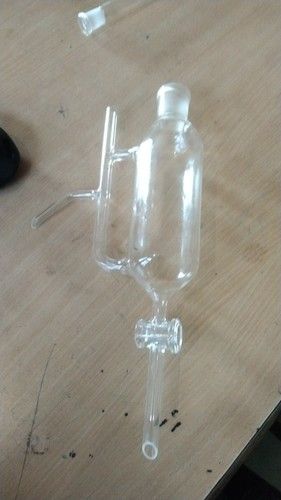
burette, also spelled buret, laboratory apparatus used in quantitative chemical analysis to measure the volume of a liquid or a gas. It consists of a graduated glass tube with a stopcock (turning plug, or spigot) at one end.Precision Gas Measurement for LaboratoriesThe Gas Measuring Lab Burette provides accurate, easy-to-read measurements with fine graduation intervals, essential for gas analysis and volumetric studies. Its clear borosilicate glass construction ensures robust chemical resistance and visual clarity, making data collection seamless for researchers and students. Suitable for a variety of laboratory experiments, its design supports both reliability and reproducibility in every use.
Engineered for Versatility and SafetyThis burette incorporates a PTFE or glass stopcock, offering controlled release and minimizing contamination. It is compatible with standard laboratory retort stands and clamps, allowing secure and stable setup. Designed to operate at atmospheric pressure, the burette is safe for routine laboratory applications and complies with stringent international standards.
Simple Upkeep and Lasting PerformanceThe burette's borosilicate glass body is highly resistant to chemicals and thermal stress, withstanding temperatures up to 200C. It is fully autoclavable, facilitating easy sterilization and reuse. Ground glass joints or rubber stoppers offer reliable sealing, further enhancing safety and maintaining measurement integrity.
FAQ's of Gas Measuring Lab Burette:
Q: How is the Gas Measuring Lab Burette typically used in laboratory experiments?
A: This burette is used for precise measurement and collection of gas volumes during laboratory experiments, such as gas evolution reactions or volumetric gas analysis. Its graduated scale enables accurate readings, while the stopcock provides controlled gas release.
Q: What materials are used in the construction of this gas burette?
A: The burette is constructed from high-quality borosilicate glass, which offers excellent chemical resistance and transparency. The stopcock is available in PTFE (Polytetrafluoroethylene) or glass, both ensuring smooth operation and durability.
Q: When should I use a burette with a 0.10 ml vs. 0.20 ml graduation interval?
A: You should use a 0.10 ml graduation for experiments where higher precision in gas measurement is required. The 0.20 ml interval is sufficient for general laboratory tasks where moderate precision is acceptable.
Q: Where can this burette be mounted or used during experiments?
A: The burette is designed to be compatible with standard laboratory retort stands and clamps, making it suitable for most laboratory setups. This ensures secure vertical alignment and stability during use.
Q: What is the proper process for cleaning and maintaining the burette?
A: After use, the burette should be rinsed with suitable laboratory detergents and then thoroughly washed with distilled water. It is autoclavable, allowing for sterilization, and resistant to common laboratory chemicals for easy maintenance.
Q: How does the burette's design benefit laboratory workflows?
A: Its precise graduations, transparent construction, and easy gas control via the stopcock enable accurate and repeatable measurements, facilitating efficient workflows and reliable experimental results.






 Get Latest Price


 Send Inquiry
 Send Inquiry
 Send SMS


