About Water Distillation
Distillation is a separation technique used to separate liquid (the solvent) from a mixture and keep the liquid part. Distillation involves boiling the solution and then condensing. the vapour. back into a liquid by cooling it down.
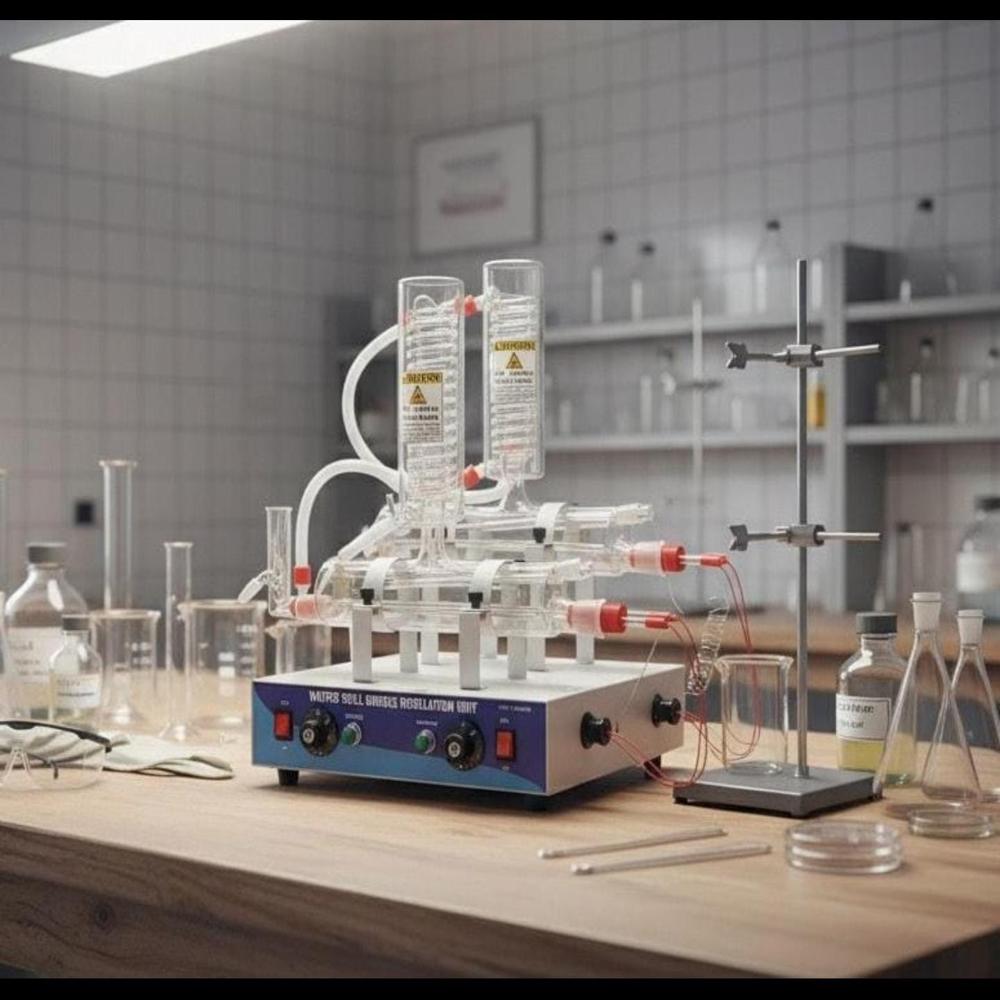
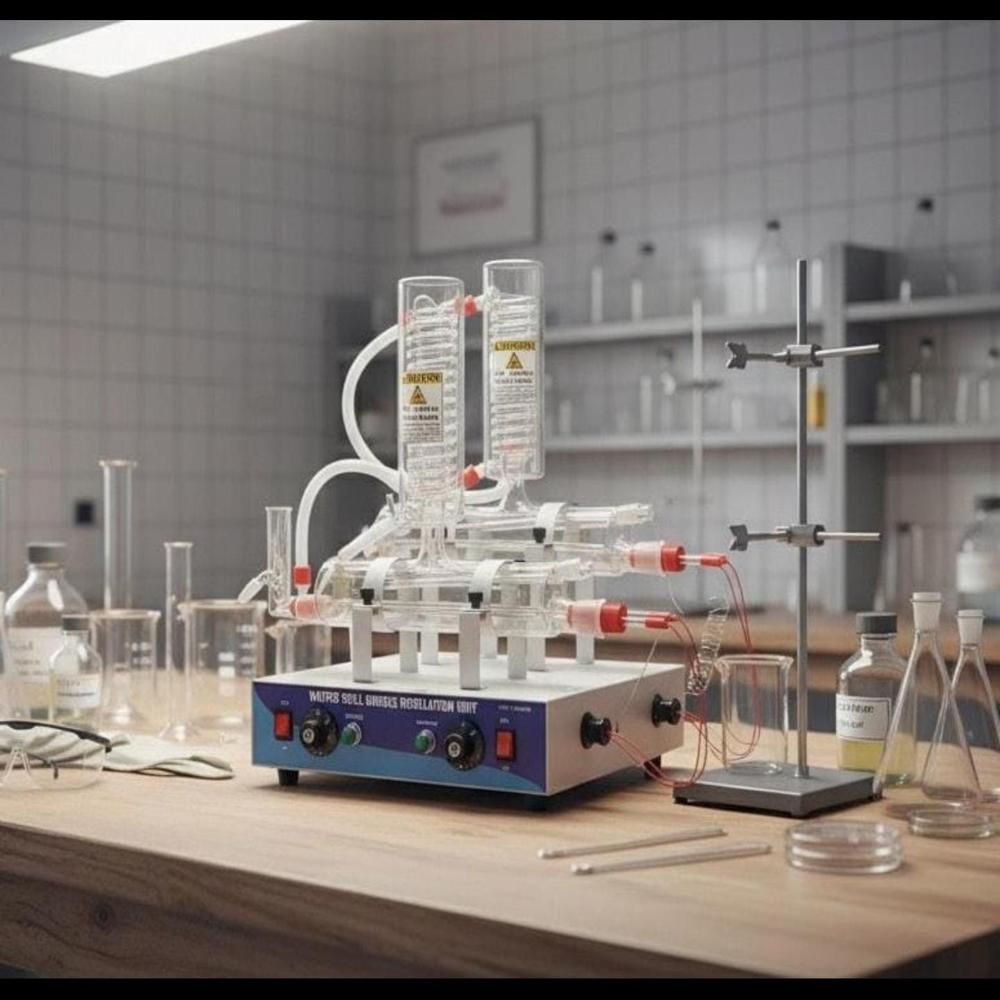
High-Quality Water PurificationThis distillation unit utilizes borosilicate glass and stainless steel to ensure durability, high temperature resistance (up to 300C), and consistent production of ultra-pure water. The advanced design guarantees that distilled water meets stringent laboratory requirements, with conductivity less than 2 S/cm at 25C for reliable experimental results.
Advanced Safety and Convenience FeaturesEquipped with an automatic water level cut-off and over-temperature protection, this unit safeguards against operational mishaps. The manual On/Off switch and removable boiling chamber enhance user control and facilitate easy maintenance. The strong protective packing guarantees safe transport and installation.
Efficient Continuous OperationDelivering up to 4 liters per hour in continuous cycles, the distillation unit ensures steady availability of distilled water for laboratory use, minimizing downtime. The glass inlet with stopcock and outlet nozzle promote effortless connection and water flow management, while its compact tabletop or floor mounting suits various lab environments.
FAQ's of Water Distillation:
Q: How does the water distillation unit ensure high purity in its output?
A: The unit employs borosilicate glass and a stainless steel heater, which eliminate contamination risk. Its single-stage distillation process consistently yields water with conductivity below 2 S/cm at 25C, meeting criteria for high-purity, pyrogen-free laboratory distilled water.
Q: What safety features are integrated into the distillation system?
A: Safety is boosted by automatic water level cut-off, over-temperature protection, and a manual On/Off switch. These mechanisms prevent overheating, water deficiency, and enable the user to control the unit as needed, lowering risk during operation.
Q: When should the boiling chamber be cleaned, and how is this done?
A: It's recommended to clean the boiling chamber periodically or whenever residue is visible. The chamber is removable, allowing easy access for rinsing and removing deposits, which helps maintain distillate quality and prolong equipment life.
Q: Where can the water distillation unit be installed within a laboratory?
A: Thanks to its compact design and mounting options, it is suitable for tabletop or floor placement. The sturdy rectangular shape and protective packing ease transport and help secure installation in various lab settings.
Q: What is the process flow for operating the water distillation equipment?
A: Water is supplied via the glass inlet stopcock. Heating initiates distillation, and pure condensate exits through the glass outlet nozzle. The system runs continually at 4 liters per hour until manually turned off, with built-in safety controls ensuring reliable and safe operation.
Q: What are the benefits of using borosilicate glass and stainless steel in the equipment?
A: Borosilicate glass and stainless steel are corrosion-resistant, highly durable, and capable of withstanding high temperatures up to 300C. This construction guarantees long-term reliability and maintains the purity of distilled water without introducing contaminants.
Q: Can this manual distillation unit meet the needs of chemical and biological labs?
A: Yes, its high accuracy, safety features, and 4 L/hr output make it ideal for laboratory water purification, chemical analysis, and biological sample preparation, ensuring that laboratories receive consistently pure and safe distilled water.






 Get Latest Price


 Send Inquiry
 Send Inquiry
 Send SMS


