About Glass Stopcock Valve
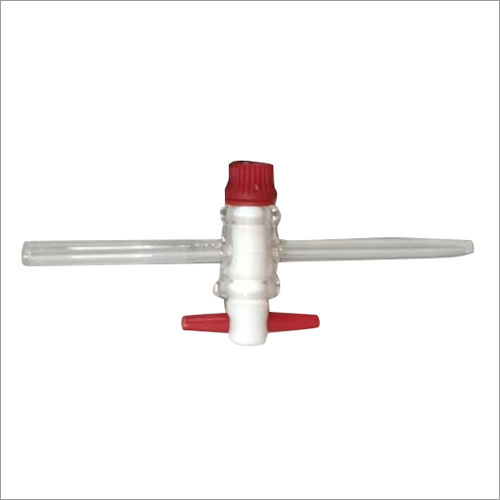
A glass stopcock valve is a precise instrument used in laboratory settings to control or stop the flow of gases and liquids. These tapered, cylindrical valves, which usually include a revolving handle or stopper, are made of sturdy materials like borosilicate glass. Its ability to withstand chemical corrosion is its main strength, guaranteeing dependable operation in challenging conditions. Glass stopcocks come in a variety of sizes, shapes, and finishes, and for increased durability, they frequently have PTFE seals. They are essential for improving fluid handling safety, precision, and control in the chemical, pharmaceutical, and research sectors. Modern manufacturing uses precision engineering and sophisticated moulding.
Exceptional Chemical Resistance for SafetyManufactured using borosilicate glass 3.3 and PTFE, the Glass Stopcock Valve guarantees outstanding resistance to corrosive acids, alkalis, and solvents. This robust composition makes it a reliable choice for handling aggressive and volatile chemicals safely in laboratories. Its resilience extends service life and minimizes risk of valve degradation during demanding operations.
Precise Flow Control and User-Friendly OperationEquipped with a manual rotary stopcock and rotatable knob, this valve allows scientists to regulate flow with high accuracy. Its design supports straightforward operation, giving users the ability to achieve desired fluid transfer rates for their specific processes. The valve's clear, easy-to-read construction further enhances usability and monitoring.
Versatile Mounting Options and Application ScopeDesigned for flexibility, the Glass Stopcock Valve supports both inline and panel mounting, making it adaptable to a variety of laboratory setups. Its standard and customizable sizes serve chemical, pharmaceutical, and scientific laboratories, supporting experimental, analytical, and production needs with equal ease.
FAQ's of Glass Stopcock Valve:
Q: How should the Glass Stopcock Valve be installed in laboratory setups?
A: The valve can be mounted either inline or on a panel, using ground glass joints for secure connections. Ensure compatibility with adjacent glassware and select unidirectional or bidirectional models based on the required flow direction.
Q: What benefits does the PTFE stopcock provide compared to conventional materials?
A: PTFE is highly resistant to acids, alkalis, and solvents, ensuring longevity and minimal maintenance. It delivers a leak-proof, chemically inert seal, ideal for handling a broad range of laboratory chemicals safely.
Q: When should I choose a unidirectional versus a bidirectional Glass Stopcock Valve?
A: Select a unidirectional valve for processes with a clear flow direction, commonly found in filtration or separation tasks. Bidirectional models are suitable where reversible flow may be required, offering greater procedural flexibility.
Q: Where is this stopcock valve typically used?
A: This valve is widely used in chemical, pharmaceutical, and scientific laboratories for controlling and isolating fluid transfer in glassware assemblies, such as distillation units, reactors, and burettes.
Q: What is the cleaning process for the Glass Stopcock Valve?
A: Disassemble the valve if possible, rinse all components with appropriate laboratory cleaning solutions, and ensure that all residues are removed. Both borosilicate glass and PTFE allow for easy cleaning and reassembly.
Q: What are the key advantages of using this Glass Stopcock Valve in laboratory environments?
A: Key advantages include precise manual flow regulation, high temperature resistance (up to 350C), exceptional chemical resistance, easy maintenance, and adaptability to various laboratory configurations.







 Get Latest Price


 Send Inquiry
 Send Inquiry
 Send SMS


