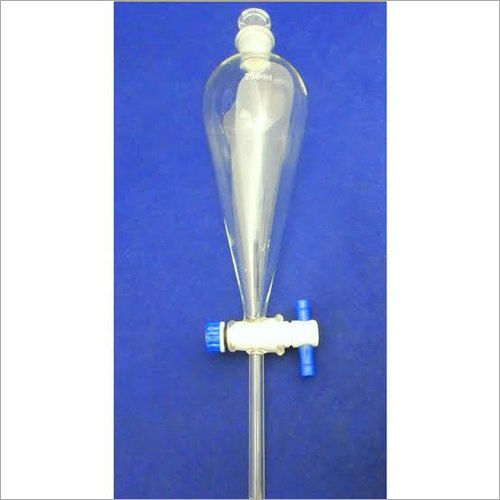
About ptfe à¤à¥ साथ डà¥à¤°à¥à¤ªà¤¿à¤à¤ फ़नल
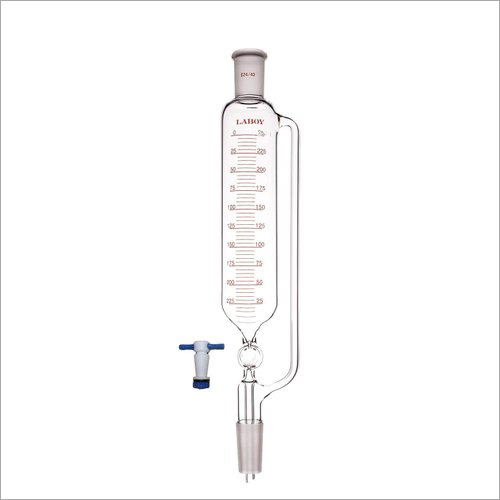
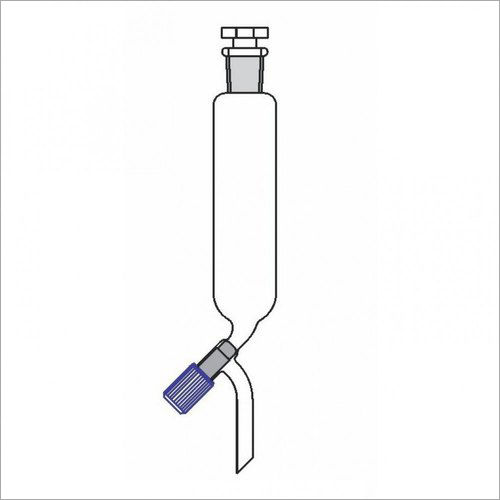
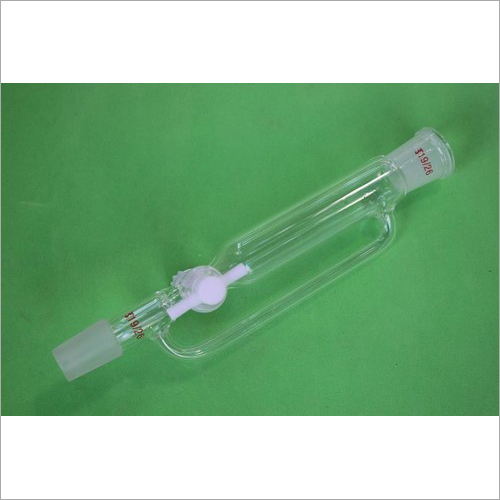
A dropping funnel with PTFE (Polytetrafluoroethylene) is a precision laboratory tool used for controlled liquid dispensing. It consists of a durable glass funnel combined with a PTFE stopcock, offering excellent chemical resistance and smooth flow control. The PTFE material ensures durability and resistance to corrosive substances. These funnels come in various sizes and shapes, often with a conical or cylindrical design, and can feature both smooth or frosted finishes. Widely used in chemical, pharmaceutical, and research industries, they are crucial for titrations, solvent additions, and other precise liquid handling tasks, ensuring accuracy and safety in reactions.
Precision and Safety in Liquid HandlingWith a PTFE stopcock and borosilicate glass construction, this dropping funnel offers exceptional chemical resistance and durabilityeven under demanding laboratory conditions. Its leakproof mechanism ensures safety, while the clear graduation markings guarantee accurate sample dispensing for sensitive applications.
Versatile and Compatible Laboratory DesignThanks to the standard ground joint, this dropping funnel integrates seamlessly with a wide range of laboratory apparatus. Available in multiple capacities and fitted with a removable PTFE stopcock, it allows easy cleaning and quick setup, making it an essential tool for various controlled liquid addition processes.
FAQs of Dropping funnel with ptfe:
Q: How do I properly use a dropping funnel with PTFE stopcock in laboratory experiments?
A: To use the dropping funnel, securely attach it to your reaction flask via the standard ground joint. Add the required liquid through the top closure, ensure the PTFE stopcock is closed, then control the dropwise addition by manually adjusting the lever. The funnels drip tip allows for precise delivery of liquids.
Q: What benefits does the PTFE stopcock provide compared to glass stopcocks?
A: PTFE (Polytetrafluoroethylene) stopcocks offer superior chemical resistance and being non-reactive, ensure no contamination with aggressive chemicals or solvents. They also provide smoother operation and are less susceptible to seizing, making them more reliable for repeated use and easy to clean or replace.
Q: When should I consider autoclaving the dropping funnel, and is it safe to do so?
A: You should autoclave the dropping funnel whenever sterilization is required, such as before sensitive experiments or following contact with hazardous substances. Both the borosilicate glass and PTFE components can withstand autoclaving temperatures, ensuring safe and thorough sterilization.
Q: Where can this dropping funnel be utilized beyond chemical laboratories?
A: While primarily designed for chemical and research laboratories, the dropping funnel is also useful in pharmaceutical settings, educational institutions, and industrial research labs wherever controlled liquid addition and high chemical resistance are necessary.
Q: What is the process for cleaning and maintaining the PTFE stopcock and glass funnel?
A: After each use, disassemble the PTFE stopcock, rinse all components with suitable solvents, and clean with mild detergents. For stubborn residues, mild brushing or ultrasonic cleaning is recommended. Ensure all parts are thoroughly dried before reassembling to avoid contamination.
Q: Is the dropping funnel compatible with all types of laboratory chemicals and solvents?
A: Due to its construction from borosilicate glass and PTFE, the dropping funnel is compatible with most laboratory chemicals and solvents, including aggressive acids and bases, making it highly versatile for a variety of experimental requirements.