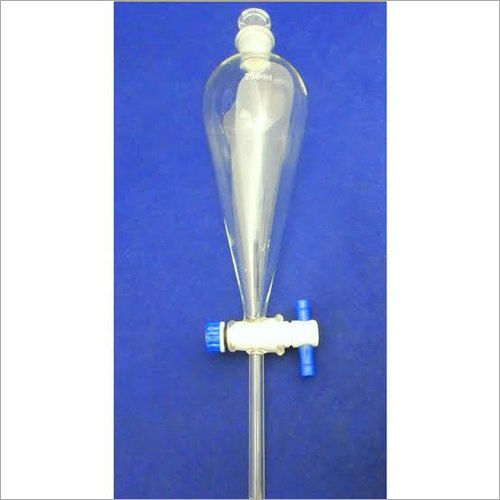
About सà¥à¤à¥à¤ªà¤à¥à¤ à¤à¥ साथ डà¥à¤°à¥à¤ªà¤¿à¤à¤ फ़नल
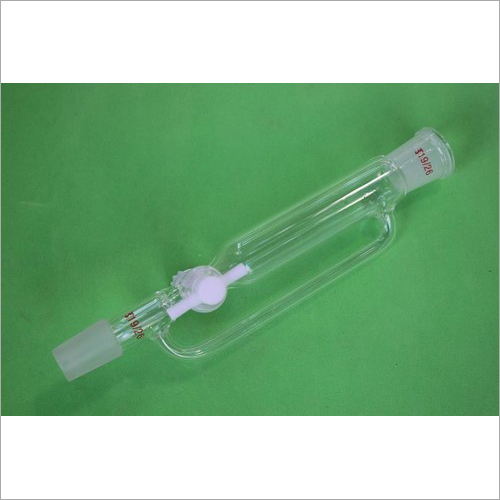
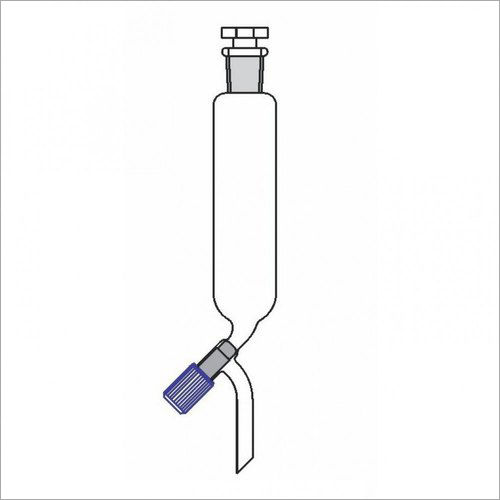
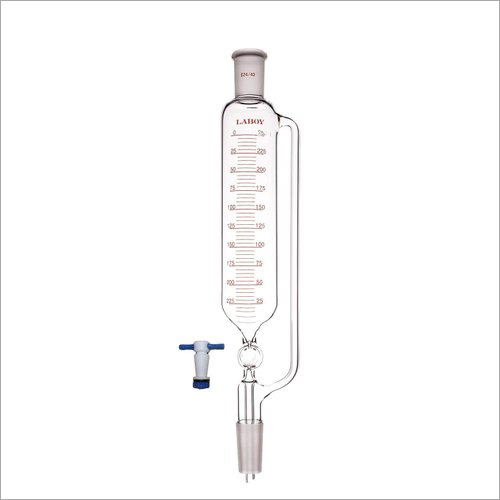
A Dropping Funnel With Stopcock is a laboratory apparatus used to control the flow of liquids into another container, typically in titration or controlled reactions. Key components include the funnel, made from durable glass, and the stopcock, often made of glass or plastic, which regulates liquid flow precisely. Available in various sizes and shapes, the funnel often features a conical or cylindrical design, with a smooth or frosted finish for ease of use. Advanced manufacturing technologies ensure precision and reliability. It finds widespread use in chemical, pharmaceutical, and research industries, benefiting processes that require accurate liquid handling and flow control.
Precision in Controlled Reagent AdditionDropping funnels with stopcock ensure high accuracy for the gradual introduction of liquids, crucial in delicate laboratory procedures. With clear acrylic graduation markings and manual PTFE or glass stopcock control, users can add reagents precisely and safely, minimizing reaction risks and optimizing experimental outcomes.
Superior Chemical and Thermal ResistanceManufactured from borosilicate glass and equipped with PTFE or glass stopcocks, these dropping funnels exhibit robust resistance to acids, alkalis, and solvents. They withstand high temperatures up to 400C, making them suitable for a broad range of chemical reactions and autoclaving processes in laboratory settings.
Designed for Ease of Use and MaintenanceFunnel features like smooth, uniform glass surface, wide neck, clear graduations, and leak-proof operation make cleaning simple and usage straightforward. These attributes promote repeatable results and efficient workflow in laboratories, while interchangeable ground joints enhance compatibility with various apparatus.
FAQ's of Dropping funnel with stopcock:
Q: How do I use a dropping funnel with a stopcock for reagent addition?
A: To use, securely mount the dropping funnel onto your reaction vessel using the appropriate ground glass joint size. Add your reagent to the funnel, ensure the stopcock is closed, and then manually open the stopcock to allow controlled, measured addition as per your experiment's requirements.
Q: What benefits does the PTFE or glass stopcock provide in laboratory processes?
A: PTFE or glass stopcocks offer excellent chemical resistance, leak-proof operation, and precise control of liquid flow. These features ensure safe reagent addition, reduce contamination risk, and improve the accuracy of experimental results.
Q: When should I choose a dropping funnel with a wide neck and graduated markings?
A: Opt for a wide-necked, graduated dropping funnel when your procedure involves adding viscous reagents, cleaning frequently, or requiring precise volume measurement. The clear graduations and accessible opening facilitate easy handling and accurate dosing.
Q: Where are leaking risks minimized with these funnels?
A: Leaking risks are minimized around the precision ground glass or PTFE stopcock and the well-fit ground glass joint connection. These seals are engineered to prevent reagent loss and exposure, ensuring safety and accurate delivery.
Q: What is the cleaning process for a dropping funnel with stopcock?
A: Cleaning is simple due to the wide neck and smooth, uniform glass finish. Rinse with suitable lab detergents, then flush out any residue under running water. For sterilization, these funnels are autoclavable, allowing heat-treated cleaning at temperatures up to 400C.
Q: Why is borosilicate glass used for this equipment?
A: Borosilicate glass is chosen for its high thermal resistance, superior chemical durability, and transparency. It withstands laboratory acids, alkalis, and solvents, and allows easy observation of reagents and reactions.